

A private label oud perfume is an oud fragrance made to your brief, bottled and presented under your name. The best results come from a partner who lives inside Arabian perfumery: someone who knows oud as a family of attars, oils, woods and incense, not only as a note on a label. HSA Perfumes brings fragrances directly from Dubai, with oud, attars, alcohol-free and water-based perfumes and bakhoor in the range, and we offer private label and wholesale services for entrepreneurs who want to launch with that heritage behind them.
This guide walks you through the decisions in the order you will face them: what “private label” really means, what oud is made of, which format suits your customer, how to write a brief, and what the United States expects of a brand that sells perfume.
TL;DR
- Private label means the fragrance is made to your specification and sold under your brand. It is a supply arrangement, so the quality of the partner decides the quality of the scent.
- “Oud” on a label can mean natural agarwood oil, a crafted accord, or a blend. Decide which you want before you ask for samples, and ask for an ingredient list that says so.
- Concentrated attar oils, which are alcohol-free by nature, are a natural fit for oud and a strong first product for a new brand.
- In the US, perfume is regulated as a cosmetic. Under the Modernization of Cosmetics Regulation Act (MoCRA), the brand must list its products and handle adverse-event reports.
- Write the brief first: scent character, format, performance, and target shelf price.
Table of Contents
- What private label oud perfume actually means
- What is inside an oud perfume
- Choosing your scent profile
- Concentration and format: where attar shines
- Writing the brief that gets you the right scent
- What the US expects of a brand that sells perfume
- Working with HSA Perfumes
- Our perspective
- FAQ
- Sources
What private label oud perfume actually means
The phrase covers more than one arrangement, and the differences shape your costs and your exclusivity.
In its purest form, private label development starts with your brief: what the scent should smell like, who it is for, and which references it sits beside. A formula is then created or adapted around that brief. White label is simpler. An existing fragrance receives your name and packaging, and the same scent may be available to other brands. Neither is better in the abstract. White label gets you to market quickly; a bespoke direction gives you a scent that is yours alone.
What matters for you as a buyer is that the word “private” does not automatically mean “exclusive.” Ask directly, in writing, whether the fragrance you are choosing is developed from your brief or selected from an existing library, and whether anyone else can order it. That single answer tells you what you are paying for.
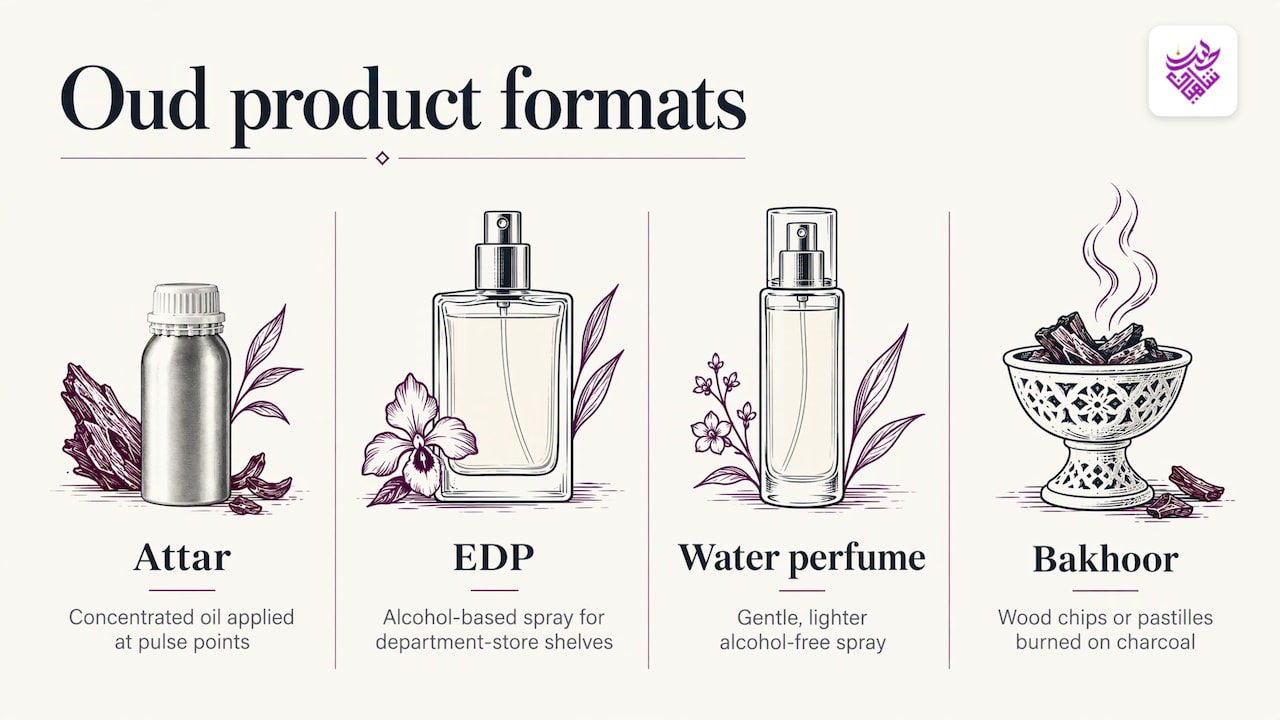
For oud, there is a second layer. The tradition of Arabian perfumery is built on oils, resins and woods, so a private label oud line can reasonably include a concentrated attar, an alcohol-based eau de parfum, a water-based perfume, or a bakhoor blend for burning. Each is a different product with a different customer.
What is inside an oud perfume
Oud, also called agarwood, is the dark, resin-laden heartwood that forms in certain trees when they are infected. Its smell is deep, smoky, sweet and a little animalic, which is why it anchors so many luxury fragrances. If you want a primer for your own customers, our guide to what oud is and how it smells covers the character of the material.
For a brand owner, the more practical question is what a bottle contains. Three situations exist:
- Natural oud oil, distilled from agarwood. It is rare, varies from batch to batch, and sits at the top of the price scale.
- An oud accord, a composition built from other materials to suggest the scent of oud. It offers consistency and a lower cost.
- A blend, where a small amount of natural oud is supported by an accord, or the reverse.
Perfumers are open about this. A senior perfumer interviewed by Allure explained that the character of natural oud comes from decaying wood, something she felt a single synthetic molecule cannot fully mimic, while another perfumer there said he sometimes pairs natural ingredients with synthetic molecules to get the effect he wants. In other words, craft matters more than a purity slogan.
The label will not settle it for you. According to Perfumer & Flavorist, “oud” and “agarwood” are not protected terms, and a note list reads the same whether the oud is oil, accord or both. The same article reports that of 1,623 perfumes in one fragrance database, 137 list oud among their notes. A contributor suggests looking for the botanical names of Aquilaria or Gyrinops species on an ingredient list and weighing ingredient transparency over price alone.
Put that into practice by asking each prospective partner for two things: a materials list that names the substances, and a clear statement of whether the oud is a distillation, a blend or an accord. If you are curious how smoky, woody notes behave in other scented products, this piece on smoky scents and how to pick them shows how the same family of notes reads outside perfumery.
We are Dubai-sourced and rooted in traditional methods and Middle Eastern ingredients, so our conversations about oud start from the material itself: what the character should be, how deep, how sweet, how smoky.
Choosing your scent profile
Oud is not one smell. Before you request samples, decide where your line sits.
Pure and resinous. Dark, woody, medicinal, slightly leathery. This is for customers who already love oud and want the real thing. Our Oud Waead pairs agarwood with amber, leather and tobacco, a good example of how far oud can travel from its raw form.
Soft and wearable. Oud smoothed with musk, oakmoss or florals so it reads as warm rather than severe. Our Silk Oud attar oil works this way, with soft musk and oakmoss around the oud. This profile suits first-time oud wearers and gift buyers.
Rich and layered. A mukhallat is a traditional blend of oils, and an oud mukhallat brings agarwood together with saffron, amber and woods. Our Oudh Mukhallat is an example of the style, and it shows how a classic Arabian composition can become the centerpiece of a collection.
Modern and designer-adjacent. Many US shoppers meet oud through Western designer lines. Fragrances in an inspired direction, such as our Oud Royal or Purple Oud, show the appeal of that bridge between worlds.
Write two or three adjectives for the scent, name one or two reference fragrances you admire, and describe the person who will wear it. That is already the core of a good brief.
Concentration and format: where attar shines
Format changes everything downstream: the raw materials, the packaging, the price, the customer.
Eau de parfum is the familiar spray, alcohol-based, and the format most US shoppers expect. It suits a line that competes on a department-store shelf.
Attar is a concentrated perfume oil, traditionally applied to pulse points with a roller or a dab from a small bottle. Because it is an oil, it is alcohol-free in character, which matters to the growing group of customers who avoid alcohol in their fragrance for personal or religious reasons. A small bottle can go a long way, which makes it an appealing gift and a good fit for travel sizes. Our guide to oud attar, scent and wear explains how customers use it, and our page on private label attar with custom oils and packaging describes the route we offer for building your own.
Water-based perfume offers a gentle, alcohol-free spray for customers who want something lighter than oil.
Bakhoor and incense are a different pleasure altogether: wood chips or pastilles soaked in oils and burned on charcoal, filling a room with fragrant smoke. If your brand imagines a full home-and-body experience, the difference between wearing oud and burning it is worth explaining to your audience, and our note on oud versus bakhoor does exactly that.
One practical caution on claims: if you describe a product as alcohol-free, it must be so. Confirm with your supplier exactly what the formula contains before the words go on a label or a web page.
Writing the brief that gets you the right scent
Most disappointments in private label come from an unclear brief, not from a poor producer. A brief that works is short and specific. Cover these points:
- The scent character. Smoky, sweet, leathery, floral, clean. Use references the way a chef uses a dish you have tasted.
- The format. Attar, spray, water-based perfume, incense, or a set that combines them.
- Performance. How strongly it should project and how long it should last on skin. Oud usually sits in the base of a composition and tends to linger, but tell your partner what you expect.
- The shelf price. Your target retail price sets the ceiling on the quality of the raw materials before formulation starts. Work it out early. Natural oud and a well-built accord sit at very different points on the cost scale.
- The packaging. Bottle, cap, label, box and any insert. Decide whether the presentation says heritage, modern luxury or a gift.
- The first order. Minimum quantities and timelines vary by project and by supplier. Ask for them in writing, per fragrance, and compare like with like.
It is also wise to be realistic about your first product. A single well-chosen scent, launched with confidence, usually serves a young brand better than a crowded range.
What the US expects of a brand that sells perfume
If you sell in the United States, you are the brand on the label, and the rules treat you accordingly. This section describes the framework in general terms. Your own situation, especially if you import or make claims about health, deserves a conversation with a regulatory adviser or attorney.
Under federal law, perfume is a cosmetic. The cosmetics provisions added by MoCRA are written into Title 21 of the US Code. In practical terms, they set out that:
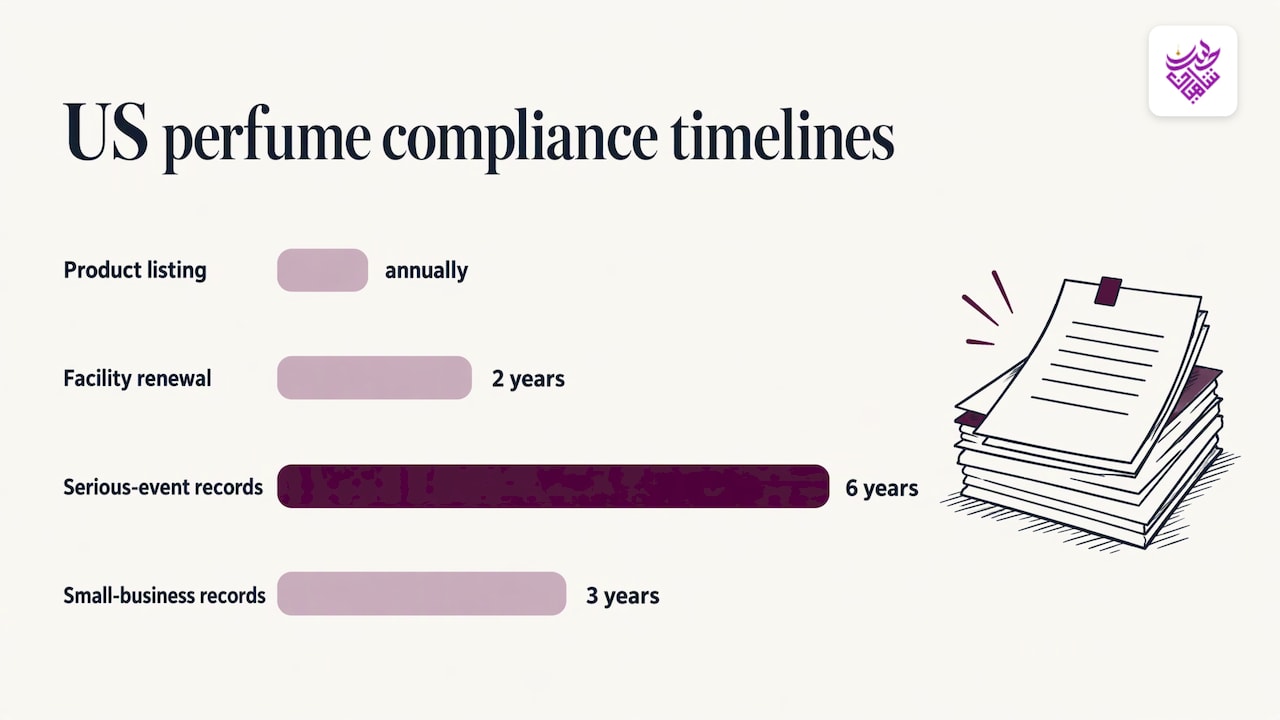
- Facilities that manufacture or process cosmetics must be registered and must renew that registration every two years.
- The “responsible person” for a product, typically the brand whose name is on the label, must list each product and update the listing annually.
- Serious adverse events must be reported to the FDA within 15 business days, and records of them kept for six years, or three for qualifying small businesses.
Because these duties fall on you, your supplier conversation should include documents as well as scent. Ask for a full ingredient list, a safety data sheet, a batch-specific certificate of analysis, and an IFRA certificate matching how the product will be used. IFRA is the fragrance industry’s safety standards body, and its certificate shows the formula respects accepted limits for fragrance ingredients. Ask too about allergen information and about stability and packaging compatibility, so a bottle does not leak or discolor in transit.
Labels need the product name, net quantity, your business details and an ingredient declaration. Keep marketing language to the experience of the scent: describe how it smells and feels, and avoid promising to treat or cure anything, since therapeutic claims move a product out of the cosmetic category.
Working with HSA Perfumes
We sell authentic Arabian fragrances: perfumes, attars, oud, water perfumes, bakhoor, mamool, uunsi and air fresheners, along with gift options. We also provide private label and wholesale fragrance services for resellers and small businesses. If your idea is an oud line, an alcohol-free attar collection, or a themed set built around Arabian incense, you can browse the range to see the character of what we make, and then tell us what you imagine.
Explore our full fragrance collections to see the oils, perfumes and incense that could inspire your brief, or visit HSA Perfumes to begin the conversation.
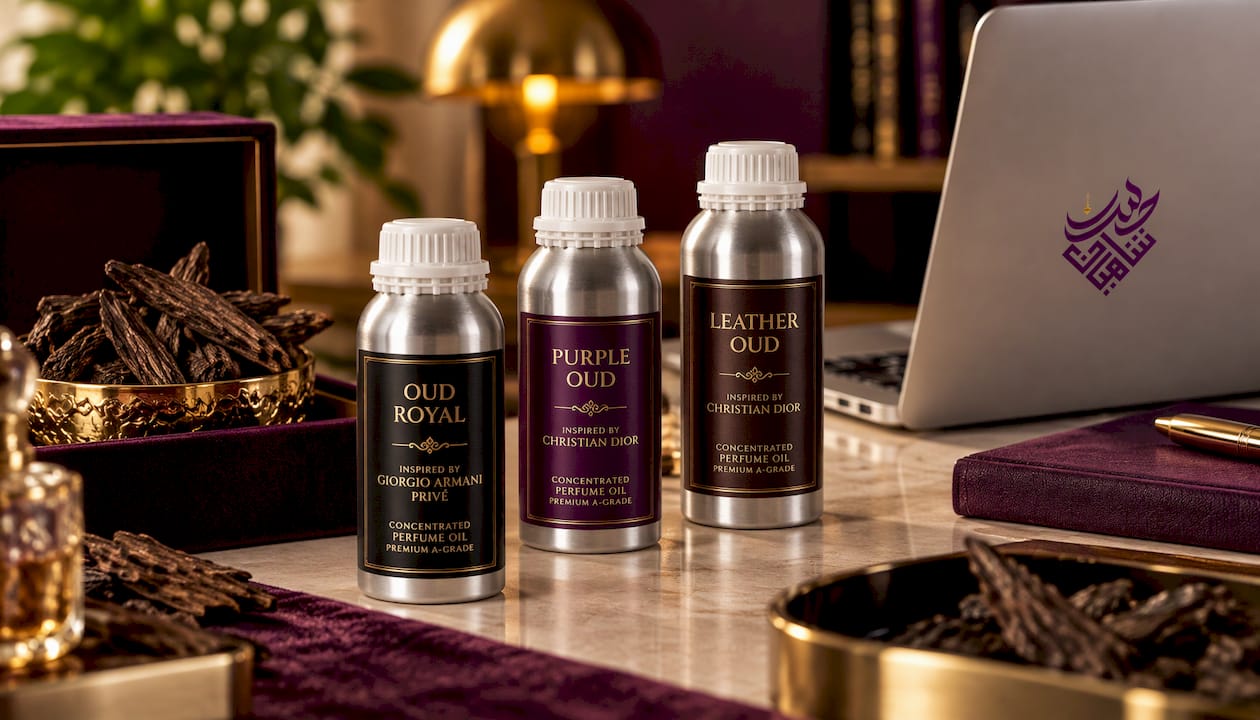
For gift shoppers reading along: the same range that inspires a private label line also makes a memorable present. An oud attar in a travel size or a bakhoor set carries a sense of occasion that few other gifts do.
Our perspective
Oud rewards patience. You can chase a price point, and you can chase a trend, but a customer who falls for a real oud remembers it for years, the way smoke lingers in a favorite fabric.
That is why we begin with the material and the tradition. Arabian perfumery has always understood fragrance as something that moves between forms: an oil worn on the skin, a spray on a collar, a ribbon of bakhoor smoke through a room. A private label line that understands this can offer more than a bottle. It can offer a ritual.
Our advice to a founder is simple. Choose one scent you would be proud to wear yourself. Decide whether it belongs as an attar, a perfume, or part of an incense set. Be honest about the oud you are using, and describe it with care. Customers can feel the difference between a name and a story, and the story is where a young brand earns its place.
We bring fragrances directly from Dubai, with traditional methods and Middle Eastern ingredients behind them, and we would be glad to help you shape yours.
Marjan
FAQ
What is the difference between private label and white label oud perfume?
Private label is built around your brief, so the scent can be yours alone. White label puts your name on an existing fragrance that other brands may also sell. Ask any supplier which one you are being offered, because “private” does not guarantee exclusivity.
Can I make an alcohol-free oud perfume under my own brand?
Yes. Concentrated attar oils and water-based perfumes are the usual alcohol-free routes, and oud suits both. We offer attars, oud and water perfumes, as well as private label services. Make sure your product description matches the actual formula before you publish it.
How do I know if the oud in a perfume is natural or synthetic?
A note list will not tell you, because “oud” reads the same for oil, accord or a blend. Ask for the materials list and a plain statement of what kind of oud is used and where the agarwood comes from. Only laboratory analysis can confirm the exact contents of an oil.
Does the FDA approve my perfume before I sell it?
No. Perfume is regulated as a cosmetic, and the responsible brand must follow the rules in MoCRA, including product listing and adverse-event reporting. Keep your documents in order and consult a regulatory adviser for your specific product and import arrangements.
Sources
- Title 21, Food and Drugs, US Code (MoCRA cosmetics provisions)
- Real Oud vs. Oud Accords: Who’s Selling What?, Perfumer & Flavorist
- What Exactly Is Oud?, Allure

Comments (0)
There are no comments for this article. Be the first one to leave a message!